MOTS-c
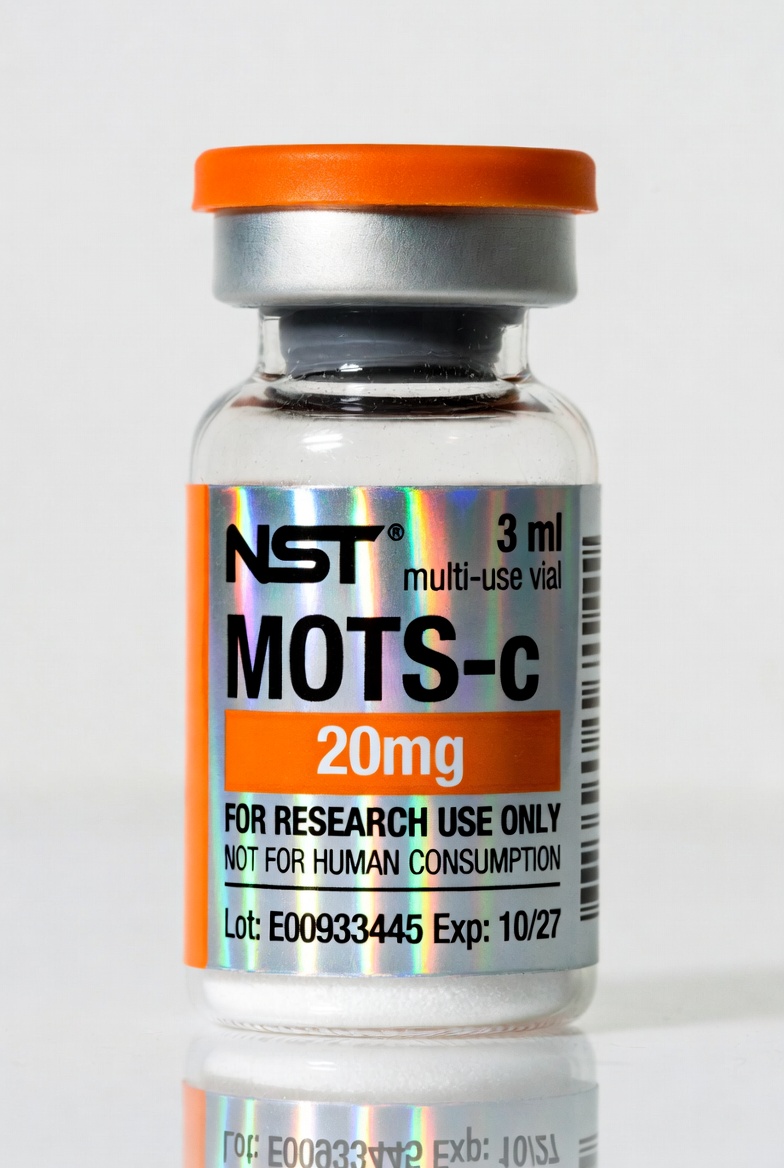
A peptide your own mitochondria produce — and produce less of as you age. Discovered in 2015, it is studied for its role as a natural metabolic signal throughout the body, activated by exercise and declining with age.
How It Works
The Target
De novo purine biosynthesis — a core metabolic pathway. MOTS-c is a 16-amino acid peptide encoded within mitochondrial DNA, making it one of the few known mitochondrial-derived peptides.
The Mechanism
Inhibits the folate cycle enzyme ATIC, which blocks purine synthesis and triggers AMPK activation — the master metabolic energy sensor. Under stress, MOTS-c translocates from mitochondria to the cell nucleus where it directly regulates nuclear gene expression, creating a retrograde signaling pathway from mitochondria to DNA.
Why It Matters
MOTS-c is the first mitochondrial-derived peptide shown to improve metabolic homeostasis. It increases during exercise and declines with age, suggesting it may be a key mediator of exercise's metabolic benefits.
Specifications
| Purity | >=95% |
| MW | ~2.2 kDa |
| Form | Lyophilized white powder |
| Storage | -80 degrees C recommended; -20 degrees C short-term |
| Reconstitution | Sterile water |
| Shelf Life | 12 months at -80 degrees C |
Published References
Read the full MOTS-c research article →